

Products

Lightning Arrester Tower
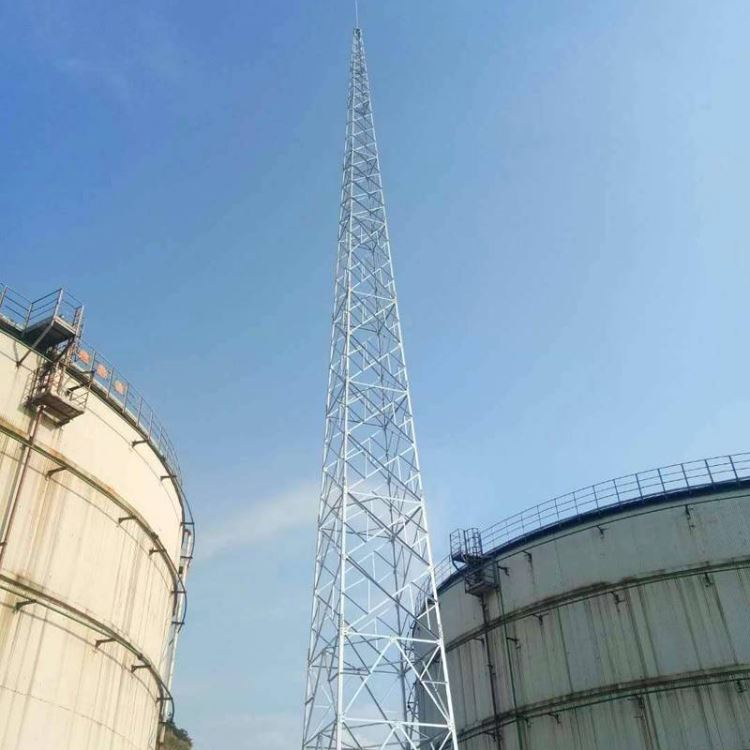
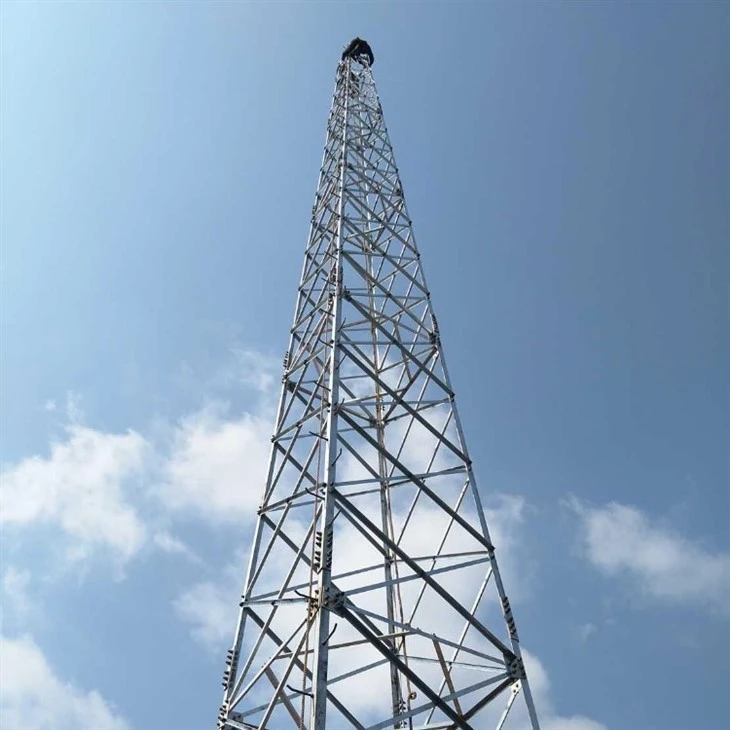
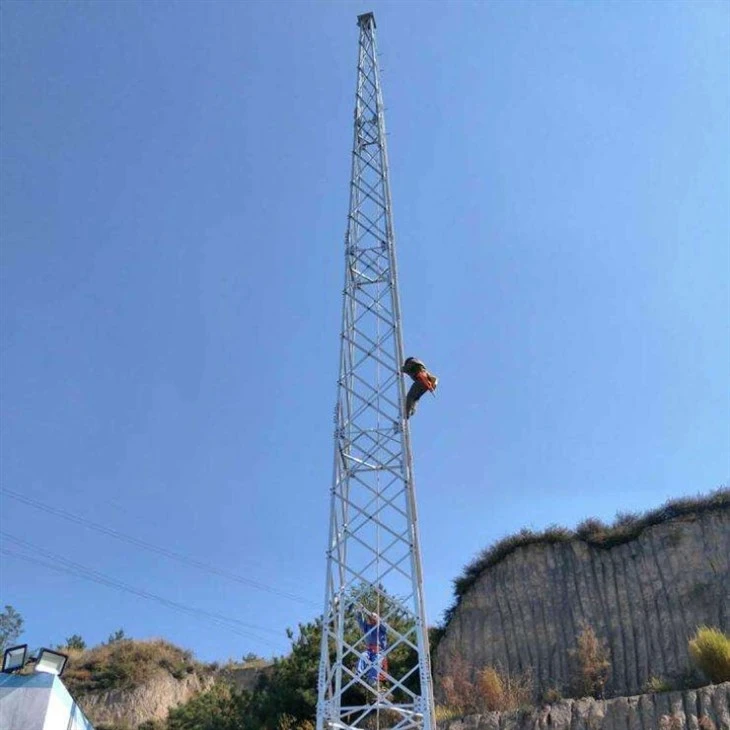
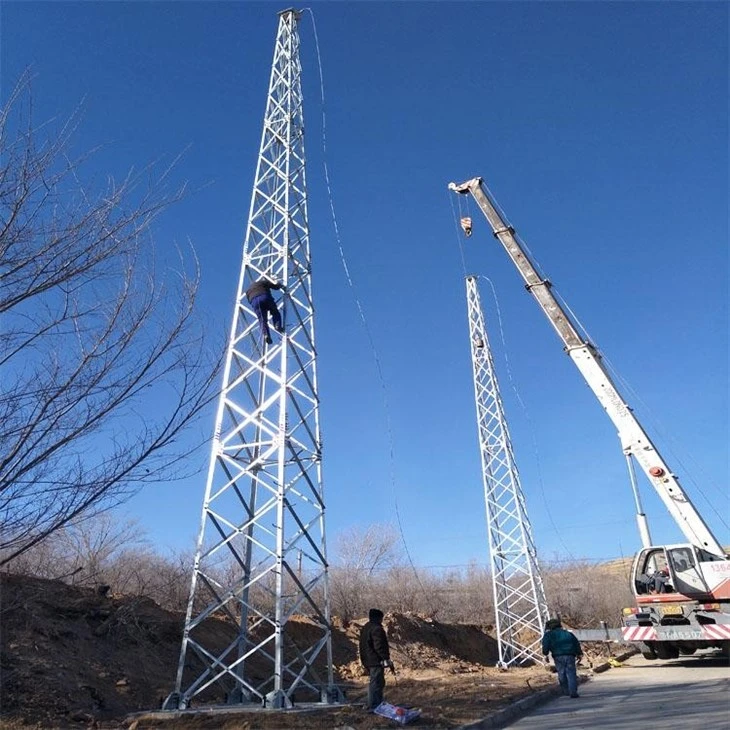
A lightning arrester tower, or lightning mast as most people in the trade call it, is simply the highest thing on site. We build lightning arrester towers in two forms, freestanding and lattice, and every one of them goes through the galvanizing bath before it is shipped. Height is the question buyers raise first: 10 m to 60 m is the range we work in, and in practice most enquiries fall between 20 and 40 m. They tend to end up in oil depots, chemical plants, substations and gas stations, which is where most of our orders go. Everything is made at our works in Hengshui, Hebei. The same tower gets used at oil depots and gas stations, chemical plants and explosives stores, substations and PV farms, telecom base stations and radar sites, plus mines, industrial parks, warehouses and water treatment works. Military sites, scenic areas and residential blocks ask for it too.
Features
Products Description
A lightning arrester tower, or lightning mast as most people in the trade call it, is simply the highest thing on site. We build lightning arrester towers in two forms, freestanding and lattice, and every one of them goes through the galvanizing bath before it is shipped. Height is the question buyers raise first: 10 m to 60 m is the range we work in, and in practice most enquiries fall between 20 and 40 m. They tend to end up in oil depots, chemical plants, substations and gas stations, which is where most of our orders go. Everything is made at our works in Hengshui, Hebei.
The same tower gets used at oil depots and gas stations, chemical plants and explosives stores, substations and PV farms, telecom base stations and radar sites, plus mines, industrial parks, warehouses and water treatment works. Military sites, scenic areas and residential blocks ask for it too.
What the tower is made of
Structure comes in three shapes: a 4-leg lattice, a 3-leg lattice on round steel, or a single pole. Heights run from 10 m to 60 m, and odd numbers are built to order rather than rounded up to the nearest catalogue size. Wind design is 30–60 m/s depending on the local code, and seismic resistance is quoted up to grade 8.
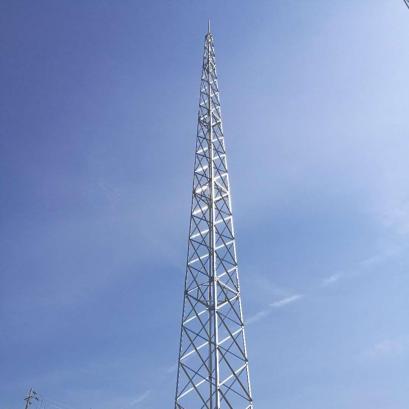
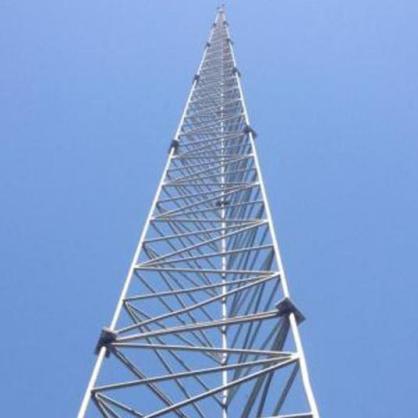
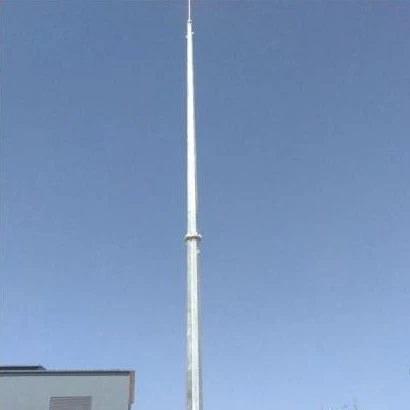
Steel is Q235B, Q355B or Q420B, and the grade gets settled with the customer rather than picked off a list. Galvanizing follows ISO 1461 at 85–110 μm; thirty years is a fair expectation in ordinary outdoor air, and near the coast or beside a chemical plant we will talk about going thicker. The protection radius is never a fixed figure. It follows the tower height and comes out of the rolling sphere calculation, so it has to be worked per site.
Connections are bolted, nothing is welded on site. Service life runs 30–50 years under normal conditions, and the company works to ISO 9001. A set arrives complete: air terminal, connecting bolts, anchor bolts, foundation drawings, so there is nothing left to source locally. Tekla models can be issued where the tower has to fit around existing structures.
How the design is put together
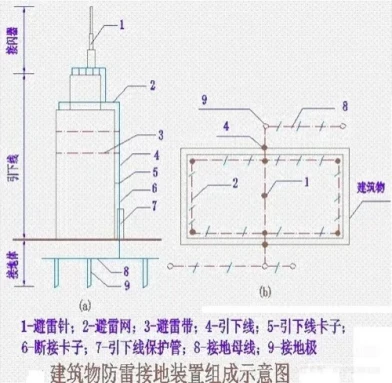
Air terminal. The rod on top, deliberately the highest thing on site; its whole job is to be the point the lightning picks.
Down conductor. Current runs through the main members, or a dedicated conductor, down to the earthing. Every joint on that path has to stay electrically continuous, and that is exactly where cheap workmanship shows up years later.
Earth termination. Foundation electrodes or a buried ring carry the current into the soil. We design for 10 Ω or less. Where the earthing is shared with switchgear, the electrical requirement governs, not ours.
Our sequence: protection class and zone first, tower height and position second, structure, foundation and earthing last. Short of zone? A taller tower, extra terminals, or another position, roughly in that order of cost.
The zone itself comes from the rolling sphere method. Roll a sphere of radius hr over the site; anything the sphere cannot reach, because the terminal or the ground is in the way, sits inside the protected zone. GB 50057 and IEC 62305 both work this way, so a design checked against one usually translates cleanly to the other.
Class I and LPL I sit at a 20–30 m radius, which is what explosive and flammable sites, oil and gas stations, ammunition depots and critical data centres are held to. Class II and LPL II–III use 30–45 m: substations, plants, offices, crowded public buildings. Class III and LPL IV go to 45–60 m for general civil buildings, ordinary storage yards and open-site facilities. Worth knowing: GB 50057-2010 gives 30 / 45 / 60 m for Class I / II / III, while IEC 62305 gives 20 / 30 / 45 / 60 m for LPL I–IV, so use the radius your project's code calls for.
Protection radius of a single air terminal
With rod height h no greater than hr, the radius rx at object height hx works out as:
rx = √[ h(2hr − h) ] − √[ hx(2hr − hx) ]
h - height of the rod, meaning the tower top; hx - height of the object being protected; hr - sphere radius for the protection class in use; rx - protection radius at height hx.
Working backwards is how it gets done in practice. Take the object furthest out, its distance and its height, then test rx against the hr you picked. If it fails, raise the top or add a terminal; that is cheaper than moving the tower.
Service and delivery
Send the site plan over and the protection layout is done at no charge, radius per tower included. Tekla models, construction drawings and foundation drawings come in the same package.
Export packing is 40HQ, with the packing list and CIQ documents handled on our side. Everything is cut, welded and labelled before it leaves, so the crew on site only assembles, and erection guidance plus after-delivery support are part of the deal.
FAQ
Q: Can the height and wind rating of a lightning arrester tower be customized?
A: Yes. Send the local wind pressure, the ice and snow loads and the radius that has to be covered. The tower gets sized against those numbers, not against a catalogue.
Q: What galvanizing standard do you work to?
A: ISO 1461. Coating 85–110 μm. That figure is what decides how long the steel lasts outdoors.
Q: Do anchor bolts and grounding materials come with the lightning arrester tower?
A: Yes, matched to the tower: air terminals, M30 anchor bolts, grounding flat steel. Same shipment if you prefer it that way.
Q: Is installation support available?
A: Assembly drawings, installation videos, and an engineer online while your crew is on site.
Hot Tags: lightning arrester tower, China lightning arrester tower manufacturers, suppliers, factory, Lightning Mast Pole, Lightning Rod for Antenna Tower, tower lightning rod
No Information
You Might Also Like


Send Inquiry
