

Power Towers
Your Professional Power Towers Supplier
Hengshui Xinsheng Tower, a shortlisted enterprise of the State Grid, is a production-oriented company specializing in the manufacture of steel towers. The factory covers an area of 70,000 square meters, has 20 production lines, over 80 pieces of professional tower production equipment, and an annual output of 100,000 tons. It is a leading manufacturer in the industry, with the capability to customize towers ranging from 10 to 200 meters.



Why choose us
Technology
The company utilizes a computer-networked management system, with a tower layout design system and CAD-based computer-aided design software. It is also equipped with advanced computer scanners, plotters, printers, and other equipment for design conversion and layout, ensuring the accuracy of tower component dimensions and improving work efficiency.
Our Certifications
Shortlisted by the State Grid Corporation of China and China Tower Corporation, the company holds the following certifications:
- ISO 9001: 2015 Quality Management System Certification
- ISO 14001: 2015 Environmental Management System Certification
- OHSAS 18001: 2018 Occupational Health and Safety Management System Certification
- Work Safety License
- Construction Enterprise Qualification Certificate
Sales Market
Serving clients nationwide, the company has an annual output of 100,000 tons and an annual turnover of 600 million yuan.
Our Services
We provide a full range of services, including:
- The production, sales, installation, and maintenance of communication towers
- The production and installation of lightning protection towers
- Fire training towers
- Technical consulting services
- Tower accessories
- Tower foundation construction
- General contracting for lightning protection projects
Power Towers
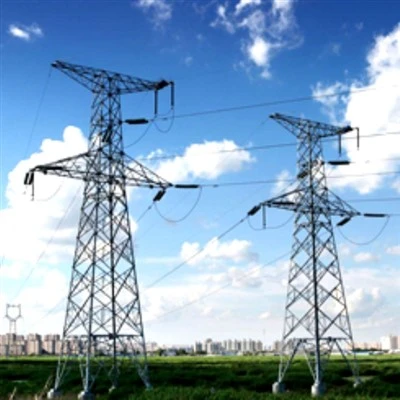
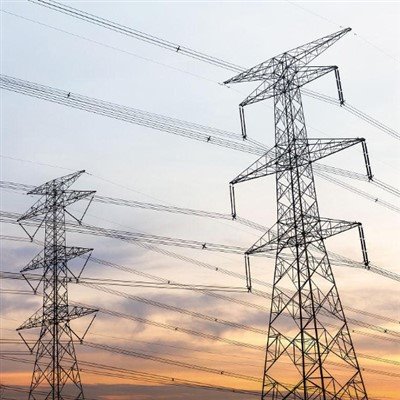
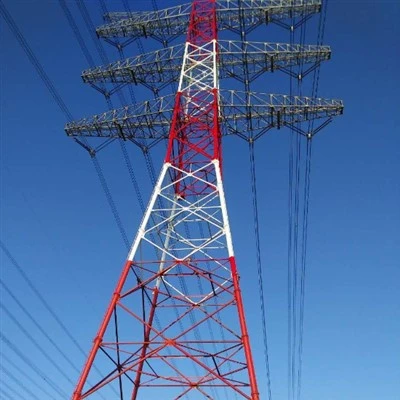
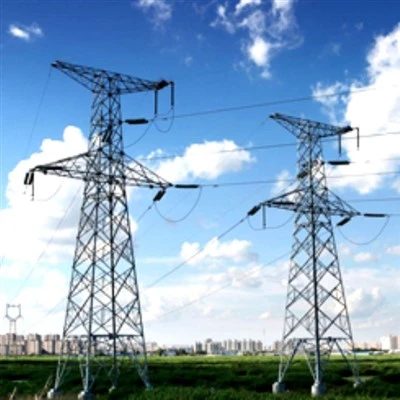
Utility power towers, also known as power transmission towers, high-voltage towers, and electricity pylons, are structures built to support high-power transmission lines. They are aimed at carrying high-voltage electrical conductors over immense distances, typically from generating plants to substations and finally to consumers via the power grid.
Pole Design Parameters

Material
Steel Q255B / Q355B / Q420B

Wind Pressure
Resistance to 30M/S

Surface Treatment
To hot-dip galvanize the surface to prevent corrosion.

Voltage Grade
Accepts transmission from 10kV to 220kV

Height
Customizable between 5 to 200 meters

Tolerance
Calibrated to specific requirements about dimension tolerance
Key Features
Typical height 15 to 55 meters (50–180 feet)
Voltage levels supported: 110 kV to 765 kV
Galvanized lattice or tubular steel, aluminum, and other composite materials

Generation: Power is generated at hydroelectric, thermal, solar, and nuclear power plants.
Step-Up Voltage: For electricity to be transmitted over large distances, transformers increase the voltage.
Transmission: Electricity is conducted through high-voltage, overhead power lines, which are supported by utility towers.
Step-Down Voltage: Substations lower the voltage for easier distribution.
Distribution: Powered electricity is sent to poles and underground lines for homes and businesses.
Steps in Electrical Power Tower Installation


Planning and Surveying
Before any construction begins, a detailed survey of the site is conducted. Engineers and surveyors assess the terrain, soil conditions, and environmental factors such as wind speeds, ice accumulation, and potential seismic activity. This data is crucial in determining the best locations for the towers and designing the installation process.
Foundation Construction
The foundation is the cornerstone of any transmission tower installation, as it supports the entire structure. The type of foundation depends on soil conditions and the tower size. Foundations are designed to meet the specific needs of each project, whether it’s a concrete pier, slab foundation, or drilled shaft. For towers in areas with unstable soil, deeper foundations are necessary to ensure stability. Anchor bolts are installed to secure the tower in place once it is erected.
Tower Assembly
Once the foundation is prepared, the tower sections are assembled. These sections, typically pre-fabricated in factories, are transported to the installation site. The tower sections are built with precision to ensure easy and efficient assembly. The assembly process varies depending on the tower type. For lattice towers, steel beams are connected to form the structure, while monopole towers require the assembly of a single pole.
Tower Erection
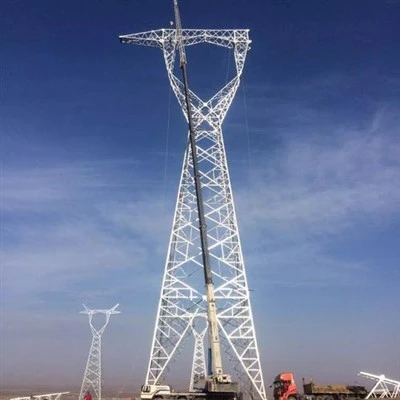
Erecting the tower is one of the most complex and dangerous stages. Skilled professionals use advanced lifting equipment, such as cranes and helicopters, to raise the tower sections into position. The tower is carefully aligned and secured to the foundation, ensuring it remains vertical and stable.
Power Line Installation
Once the tower is fully erected, power lines are installed. Insulators are attached to the tower to hold the cables in place. The power lines are strung from one tower to the next, either manually or with the help of helicopters or line trucks. The lines are carefully tensioned to avoid sagging or damage from environmental factors like wind or ice. The lines are then tested to ensure they are functioning properly.
Inspection and Testing
A thorough inspection is conducted after installation to ensure that all components of the power tower are secure and functioning as expected. Engineers check the structural integrity of the tower, the alignment of the power lines, and the proper installation of electrical equipment such as transformers and switches. The company's commitment to quality ensures that each tower and power line installation is thoroughly tested to meet industry standards.
Commissioning
After installation and inspection, the system is ready for commissioning. This involves energizing the power lines and transferring electricity from the power plant to the substation. Technicians monitor the system closely during the initial phase to ensure smooth operation, addressing any issues promptly to guarantee that the system is fully operational.
Transmission towers are key facilities used in the power system to support and transmit electrical energy, and their core uses can be summarized as follows
Support transmission lines and lightning protection lines
01
Ensure the safety and stability of the power system
02
Promote regional economic development
03
Support clean energy grid connection
04
Diversified functions and designs
05
Our Certificate


FAQ
As one of the leading power towers manufacturers and suppliers in China, we warmly welcome you to buy discount power towers for sale here and get pricelist from our factory. Quality products and reasonable price are available.
