

What is the voltage level carried by high voltage towers?
Hey there! As a supplier of high voltage towers, I often get asked about the voltage levels these bad boys can carry. So, I thought I'd sit down and write a blog post to clear up any confusion.
Let's start with the basics. High voltage towers are a crucial part of our power infrastructure. They're the giants that carry electricity over long distances, making sure that power gets from the generation source to our homes and businesses. But what exactly is the voltage level they carry? Well, it's not a one - size - fits - all answer.
High voltage can be classified into different ranges, and high voltage towers are designed to handle various levels depending on the specific needs of the power grid. Generally, high voltage starts at around 110 kV (kilovolts). That's a pretty hefty amount of power! Some of the common voltage levels you'll find on high voltage towers are 110 kV, 220 kV, 330 kV, and even up to 765 kV in some large - scale transmission systems.
At 110 kV, these towers are often used for regional power distribution. They're like the middle - men in the power delivery process, taking electricity from larger power plants and sending it to smaller substations in different areas. This voltage level is suitable for covering medium - distance areas and supplying power to towns and smaller cities. For example, if you're in a suburban area, chances are the power lines you see on those towers are operating at around 110 kV.
When we jump up to 220 kV, we're talking about more significant power transmission. These towers are used to carry electricity over longer distances, connecting major power generation centers to large urban areas. The higher voltage means less power loss during transmission, which is super important when you're moving electricity over hundreds of miles. Imagine trying to send power from a hydroelectric dam in the mountains to a big city on the coast. A 220 kV high voltage tower would be a key player in that process.
The 330 kV and 765 kV levels are on a whole other scale. These are used for long - haul, high - capacity power transmission. The 330 kV towers are often found in large - scale national or regional power grids, while the 765 kV ones are the heavy - hitters, used mainly in areas with extremely high power demands or for interconnecting different national power systems.
Now, let's talk about the different types of high voltage towers. There are High Tension Electric Tower, High Tension Line Tower, and High Voltage Power Tower. Each type is designed to handle different voltage levels and environmental conditions.
High Tension Electric Towers are built to support the high - voltage lines and keep them at a safe distance from the ground and other objects. They're usually made of steel and are designed to be strong and durable. These towers can handle a wide range of voltage levels, from 110 kV to 765 kV, depending on their design and construction.
High Tension Line Towers, on the other hand, are more focused on the actual transmission of the high - voltage lines. They're often taller and have a more streamlined design to reduce wind resistance. These towers are typically used for the higher voltage levels, such as 330 kV and 765 kV, where minimizing power loss and ensuring efficient transmission are crucial.
High Voltage Power Towers are the all - rounders. They're designed to support the high - voltage power lines and also provide a stable base for other equipment, like transformers and insulators. These towers can be found in a variety of voltage levels and are used in both urban and rural areas.
As a high voltage tower supplier, I know how important it is to get the right tower for the right job. That's why we offer a wide range of high voltage towers, each designed to meet specific voltage requirements and environmental conditions. Whether you need a tower for a small - scale regional distribution or a large - scale national power grid, we've got you covered.
We use the latest technology and materials to ensure that our towers are not only strong and durable but also meet all the safety standards. Our team of experts is always on hand to help you choose the right tower for your project, taking into account factors like voltage level, terrain, and weather conditions.

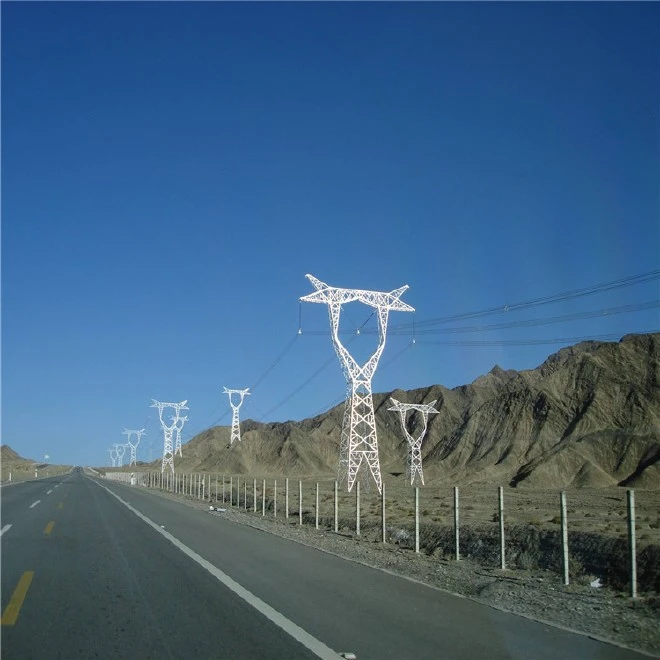
If you're in the market for high voltage towers, whether you're a power company, a contractor, or involved in a new power project, I'd love to talk to you. We can have a chat about your specific needs and come up with a solution that works for you. Don't hesitate to reach out and start the conversation about your high voltage tower requirements.
In conclusion, high voltage towers carry a wide range of voltage levels, from 110 kV to 765 kV, depending on the specific needs of the power grid. Different types of towers, like High Tension Electric Tower, High Tension Line Tower, and High Voltage Power Tower, are designed to handle these different levels and ensure efficient and safe power transmission. If you're interested in learning more or making a purchase, just get in touch!
References
- Electrical Power Systems by Turan Gonen
- High - Voltage Engineering by E. Kuffel, W. S. Zaengl, and J. Kuffel