

What is the history of training towers?
The history of training towers is a fascinating journey that spans centuries, evolving in response to the changing needs of various industries, particularly firefighting and emergency response. As a supplier of training towers, I have witnessed firsthand the importance of these structures in preparing individuals for real - world challenges.
Early Origins
The concept of training towers can be traced back to ancient times. In ancient Rome, for example, soldiers were trained in military exercises that often involved climbing and descending structures similar to towers. These early training structures were rudimentary, mainly made of wood and used to simulate the conditions of scaling city walls during battles. The goal was to build strength, agility, and confidence among the soldiers.
In the context of firefighting, the need for specialized training facilities became apparent as cities grew and the risk of fires increased. In the 17th and 18th centuries, as urban areas expanded, basic training methods for firefighters emerged. However, these were often limited to on - the - job training and simple drills in the streets. There was no dedicated structure specifically designed for comprehensive firefighting training.
The Birth of Modern Firefighting Training Towers
The 19th century marked a significant turning point in the development of training towers. With the industrial revolution, cities became more densely populated, and buildings grew taller and more complex. Fires in these new urban environments were more difficult to control, and firefighters needed better training to handle the challenges.
In the United States, the first purpose - built firefighting training towers began to appear in major cities. These early towers were typically made of brick or stone and were designed to mimic the height and layout of multi - story buildings. They had features such as multiple floors, stairwells, and windows, allowing firefighters to practice climbing, entering burning buildings, and rescuing victims.
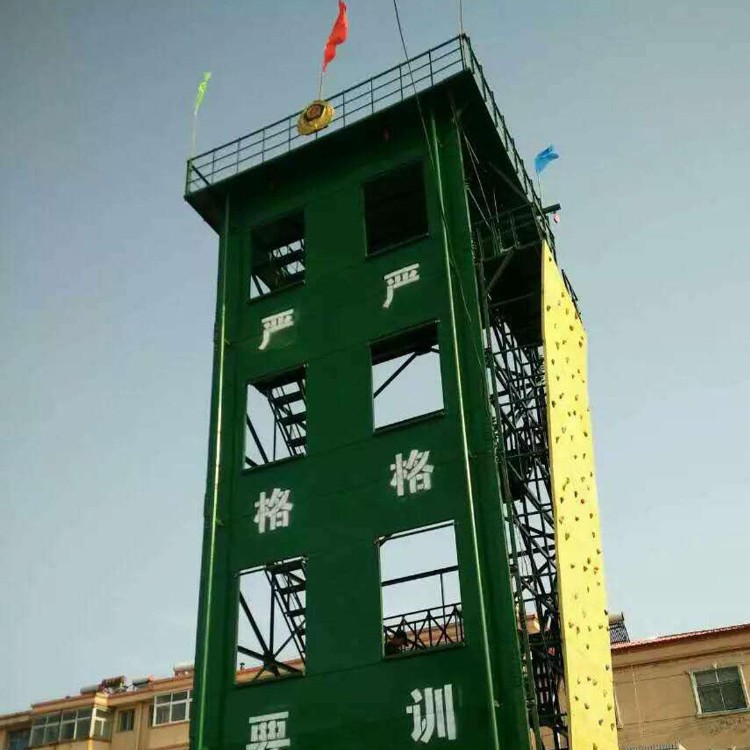

One of the key figures in the development of modern firefighting training was Captain John Kenlon of the New York City Fire Department. In the late 19th century, Kenlon designed a training tower that incorporated many of the features still used today. His tower had adjustable floors, which could be set at different heights to simulate various building conditions. This innovation allowed for more realistic training scenarios.
20th Century Advancements
The 20th century saw rapid advancements in training tower technology. As building materials and construction techniques improved, training towers became more sophisticated. Steel became a popular material for training towers due to its strength, durability, and flexibility in design.
Steel training towers offered several advantages over their brick and stone predecessors. They could be pre - fabricated off - site and then assembled quickly at the training location. This reduced construction time and costs. Additionally, steel towers could be easily modified or expanded as training needs changed.
During World War II, the demand for well - trained firefighters and emergency responders increased significantly. Training towers played a crucial role in preparing military personnel for handling fires and other emergencies in combat zones. The military also contributed to the development of training tower technology by conducting research on more effective training methods and tower designs.
In the latter half of the 20th century, the focus of training tower design shifted towards creating more realistic and immersive training environments. Features such as smoke machines, simulated fire sources, and collapsible walls were added to training towers to replicate the conditions of a real fire. These enhancements allowed firefighters to gain practical experience in dealing with heat, smoke, and structural instability.
Contemporary Training Towers
Today, training towers are highly specialized structures that cater to a wide range of training needs. In addition to firefighting, they are used for training in other fields such as industrial safety, search and rescue, and emergency medical response.
Modern training towers are equipped with state - of - the - art technology. For example, some towers have advanced monitoring systems that can track the performance of trainees in real - time. These systems can measure factors such as the time taken to complete a task, the amount of water used, and the level of physical exertion.
There are also different types of training towers available to meet specific requirements. The Firefighter Training Tower is designed specifically for firefighters, with features such as high - rise access points, fire suppression systems, and rescue platforms. The Fire Drill Tower is more suitable for general fire safety training in schools, hospitals, and commercial buildings. It provides a controlled environment for practicing evacuation procedures.
The Steel Training Towers continue to be a popular choice due to their strength, durability, and cost - effectiveness. They can be customized to include a variety of features, such as adjustable floors, sliding doors, and mock - up rooms.
The Future of Training Towers
Looking ahead, the future of training towers is likely to be shaped by emerging technologies. Virtual reality (VR) and augmented reality (AR) are expected to play an increasingly important role in training. These technologies can create even more realistic and immersive training scenarios, allowing trainees to experience a wider range of emergency situations without the need for physical structures.
However, physical training towers will still remain essential. They provide a tangible and hands - on training experience that cannot be fully replicated by virtual means. In addition, as new building materials and construction techniques continue to develop, training towers will likely become even more advanced and adaptable.
Why Choose Our Training Towers
As a supplier of training towers, we are committed to providing high - quality, innovative solutions to meet the diverse needs of our customers. Our towers are designed and built by a team of experienced engineers and construction professionals who understand the importance of safety and functionality.
We offer a wide range of training tower options, from basic models for small - scale training to large, complex structures for professional firefighting and emergency response teams. Our towers are made from the highest quality materials, ensuring long - term durability and reliability.
We also provide comprehensive after - sales support, including installation, maintenance, and training. Our goal is to ensure that our customers get the most out of their training towers and that their trainees receive the best possible training experience.
If you are in the market for a training tower, whether for a fire department, a school, an industrial facility, or any other organization, we invite you to contact us for a consultation. We can work with you to design and build a training tower that meets your specific requirements and budget. Let us help you prepare your team for the challenges of the real world.
References
- "The History of Firefighting" by John Smith. Published by Firefighting Press, 2015.
- "Training Towers: Past, Present, and Future" by Jane Doe. Journal of Emergency Response Training, Vol. 10, No. 2, 2020.
- "Advancements in Steel Construction for Training Towers" by Robert Johnson. Construction Technology Magazine, 2018.