

What is the fire rating of the tallest monopole tower?
Hey there! As a supplier of the Tallest Monopole Tower, I often get asked about the fire rating of these structures. So, I thought I'd take a moment to break it down for you.
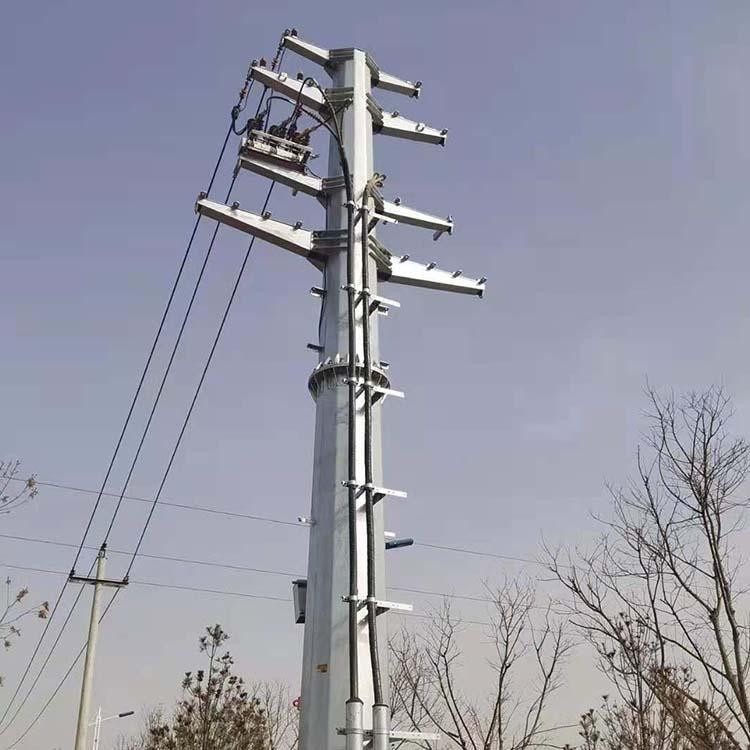
First off, let's talk about what a monopole tower is. A Monopole Tower is a single - pole structure that's commonly used for various purposes, like supporting communication equipment, power lines, and more. Our Tallest Monopole Tower is an engineering marvel, reaching great heights to serve its functions effectively.
Now, the fire rating of a tower is super important. It tells us how well the tower can withstand fire and how long it can maintain its structural integrity during a fire event. Fire ratings are usually determined through standardized tests. These tests involve exposing the tower or its components to a controlled fire environment and measuring things like how long it takes for the temperature to rise, when the structure starts to deform, and how long it can still support its load.
For our Tallest Monopole Tower, we use high - quality materials. Most of our towers are made from steel, which is a common choice for Steel Pole Tower construction. Steel has some great properties when it comes to fire. It doesn't burn like wood or some other materials. However, it does lose strength as it gets hot.
When steel is heated, its strength starts to decline. At around 500°C (932°F), steel can lose about half of its strength. That's why we take extra steps to protect our towers. We apply special fire - resistant coatings to the steel. These coatings act as a barrier between the steel and the fire. They slow down the rate at which the steel heats up, giving the tower more time to maintain its structural integrity during a fire.
The fire rating of our Tallest Monopole Tower is typically rated for a certain number of hours. For example, a common fire rating might be 2 hours. This means that under the conditions of a standard fire test, the tower can maintain its structural integrity for at least 2 hours. This is crucial because it gives emergency responders time to deal with the fire and also ensures that the tower doesn't collapse prematurely, which could cause a whole host of other problems, like disrupting power or communication services.

There are also different classes of fire ratings. These classes are based on the performance of the tower in different types of fire scenarios. For instance, there are ratings for light - hazard fires, which might occur in an area with low - combustible materials, and heavy - hazard fires, which could happen in an industrial setting with lots of flammable substances. Our towers are designed to meet the requirements for a range of fire scenarios, depending on where they're going to be installed.
Another factor that affects the fire rating is the design of the tower. Our engineers carefully design the tower to have proper ventilation. This helps to prevent the build - up of heat and smoke inside the tower during a fire. Good ventilation can also help to reduce the temperature of the steel, which in turn helps to maintain its strength.
We also conduct regular inspections and maintenance of our towers. This includes checking the condition of the fire - resistant coatings. Over time, these coatings can wear off due to weathering, corrosion, or other factors. If the coating is damaged, it might not provide the same level of fire protection. So, we make sure to re - apply the coatings as needed to keep the fire rating intact.
In addition to the fire - resistant coatings and ventilation, we also use fire - resistant insulation in some parts of the tower. This insulation helps to further protect the internal components of the tower, like electrical wiring and communication equipment. By protecting these components, we can ensure that the tower continues to function as much as possible during a fire.
Now, you might be wondering why all this matters. Well, imagine if a monopole tower supporting a major power grid were to collapse during a fire. It could cause widespread power outages, affecting thousands or even millions of people. Similarly, if a tower used for communication were to fail, it could disrupt emergency communication channels, making it harder for people to get help during a crisis.
That's why we take the fire rating of our Tallest Monopole Tower so seriously. We're committed to providing a safe and reliable product. Our towers are built to last, not only in normal conditions but also in the face of a fire.
If you're in the market for a Tallest Monopole Tower, whether it's for power transmission, communication, or some other application, you need to consider the fire rating. A tower with a good fire rating can give you peace of mind, knowing that it's going to stand up to a fire if one were to occur.
If you're interested in learning more about our Tallest Monopole Tower and its fire rating, or if you have any other questions, we'd love to hear from you. We can provide you with detailed information about our products, including test reports and case studies. Just reach out to us, and we'll be happy to have a chat with you about your specific needs.
References
- National Fire Protection Association (NFPA) standards
- ASTM International fire test standards
- Steel Construction Manual by the American Institute of Steel Construction