

What is the electrical conductivity of a steel pole tower?
Hey there! As a supplier of Steel Pole Tower, I often get asked about the electrical conductivity of steel pole towers. So, I thought I'd write this blog to share what I know and answer some common questions.
Let's start with the basics. Electrical conductivity is a measure of how easily an electric current can pass through a material. It's usually represented by the symbol σ (sigma) and is measured in siemens per meter (S/m). The higher the conductivity, the better the material is at conducting electricity.
Steel is an alloy mainly composed of iron and carbon, along with other elements in small amounts. When it comes to electrical conductivity, steel is not as good as some other metals like copper or aluminum. Copper has an electrical conductivity of around 5.96×10⁷ S/m, and aluminum has a conductivity of about 3.77×10⁷ S/m. In contrast, the electrical conductivity of steel typically ranges from about 1×10⁶ S/m to 1×10⁷ S/m, depending on its composition and the presence of impurities.
Now, you might be wondering why we use steel for pole towers if it's not the best conductor. Well, there are several reasons. First of all, steel is incredibly strong and durable. Pole towers need to withstand various environmental conditions, such as strong winds, heavy snow, and even earthquakes in some areas. Steel's high strength - to - weight ratio makes it an ideal choice for building tall and stable structures.

Secondly, cost is a significant factor. Copper and aluminum are more expensive than steel. For large - scale infrastructure projects like power transmission networks, using steel for pole towers can significantly reduce the overall cost without sacrificing too much in terms of functionality.
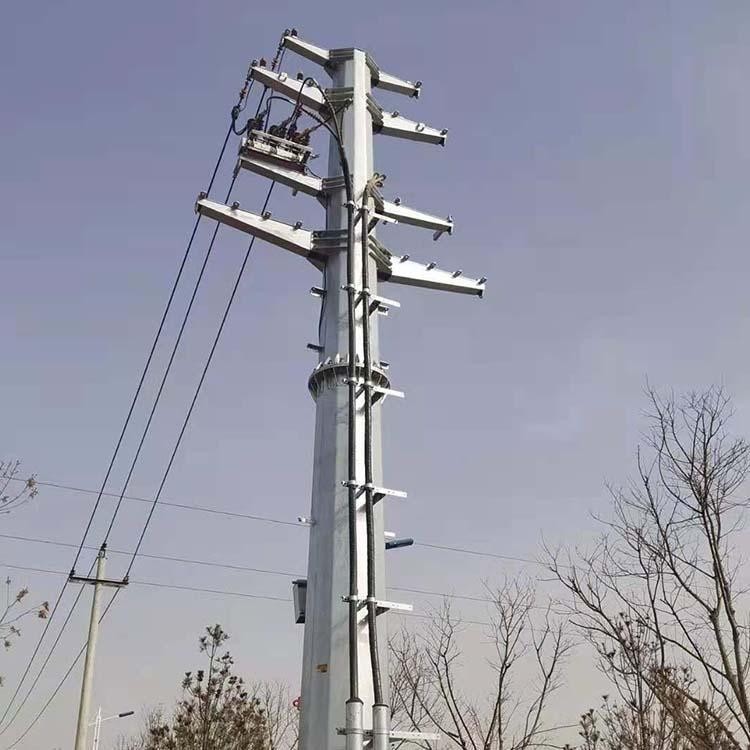
In a power transmission system, the main purpose of a steel pole tower is not to conduct electricity but to support the power lines. The power lines themselves are usually made of materials with high electrical conductivity, like aluminum or copper - clad steel. The steel pole tower acts as a mechanical support structure, holding the power lines at a safe height above the ground to prevent contact with people, animals, and other objects.
However, the electrical conductivity of the steel pole tower still plays a role in the system. One important aspect is grounding. A proper grounding system is crucial for the safety and stability of the power transmission network. When there is a fault in the system, such as a short - circuit, excess electrical current needs to be safely diverted to the ground. The steel pole tower can be part of the grounding path. The tower's electrical conductivity helps in quickly dissipating the fault current into the ground, reducing the risk of damage to the equipment and ensuring the safety of nearby people.
The grounding system of a steel pole tower typically consists of a grounding electrode, which is usually a metal rod or plate buried in the ground, and a connection between the tower and the electrode. The conductivity of the steel in the tower affects how efficiently the fault current can flow from the tower to the grounding electrode and then into the ground.
Another factor that can influence the electrical conductivity of a steel pole tower is corrosion. Over time, steel can corrode when exposed to moisture, oxygen, and other chemicals in the environment. Corrosion can form a layer of rust on the surface of the steel, which is a poor conductor of electricity. This can reduce the overall electrical conductivity of the tower and may also weaken its mechanical strength. To prevent corrosion, steel pole towers are often coated with protective layers, such as galvanized coatings or paint. These coatings not only protect the steel from corrosion but also help maintain its electrical conductivity over time.
If you're involved in a power transmission project and are considering using steel pole towers, you might be interested in the Tallest Monopole Tower. These towers are engineering marvels, combining the strength of steel with advanced design techniques to reach great heights. They are often used in areas where space is limited or where a more aesthetically pleasing solution is required.
As a supplier of steel pole towers, I can offer a wide range of products to meet your specific needs. Whether you need a small - scale tower for a local distribution network or a large - scale tower for a high - voltage transmission line, we've got you covered. Our steel pole towers are made from high - quality steel, and we use advanced manufacturing processes to ensure their strength, durability, and proper electrical conductivity.
If you're in the market for steel pole towers, I'd love to have a chat with you. We can discuss your project requirements, the best type of tower for your application, and how we can provide you with a cost - effective and reliable solution. Don't hesitate to reach out and start the conversation. Whether you're an engineer, a project manager, or someone involved in the power industry, I'm here to help you make the right choice for your power transmission needs.
References
- "Electrical Conductivity of Metals" - A standard materials science textbook
- "Power Transmission System Design and Operation" - Industry - specific literature on power infrastructure
So, if you're interested in learning more or making a purchase, just get in touch. Let's work together to build a better power transmission network!