

How to design a steel pole tower for high - voltage power lines?
Designing a steel pole tower for high - voltage power lines is a complex yet crucial task that requires a deep understanding of engineering principles, safety standards, and environmental factors. As a Steel Pole Tower supplier, I have been involved in numerous projects, and I'd like to share some insights on this process.
Understanding the Basics of High - Voltage Power Line Requirements
Before starting the design process, it's essential to understand the specific requirements of the high - voltage power lines. High - voltage power lines typically operate at voltages ranging from 69 kV to 765 kV or even higher in some cases. The voltage level determines the electrical clearances, which are the minimum distances between the conductors and other objects, such as the tower structure, the ground, and nearby buildings.
The power capacity of the line also plays a significant role. Higher power capacities may require larger conductors, which in turn increase the weight and mechanical loads on the tower. Additionally, the type of power transmission, whether it's alternating current (AC) or direct current (DC), can affect the design. DC power lines, for example, may have different electromagnetic field characteristics and may require different tower configurations.
Site Assessment
A thorough site assessment is the next step in the design process. This includes evaluating the topography of the area where the tower will be installed. Hilly or mountainous terrain may require taller towers or special foundation designs to ensure stability. The soil conditions are also critical. Soft or unstable soils may need deep foundations, such as piles or caissons, to support the tower's weight.
Environmental factors such as wind, ice, and seismic activity must be considered. High - wind areas require towers that can withstand strong gusts without toppling. Ice accumulation on the conductors can add significant weight to the tower, and the design must account for this additional load. In seismic zones, the tower must be designed to resist the forces generated by earthquakes.
Structural Design
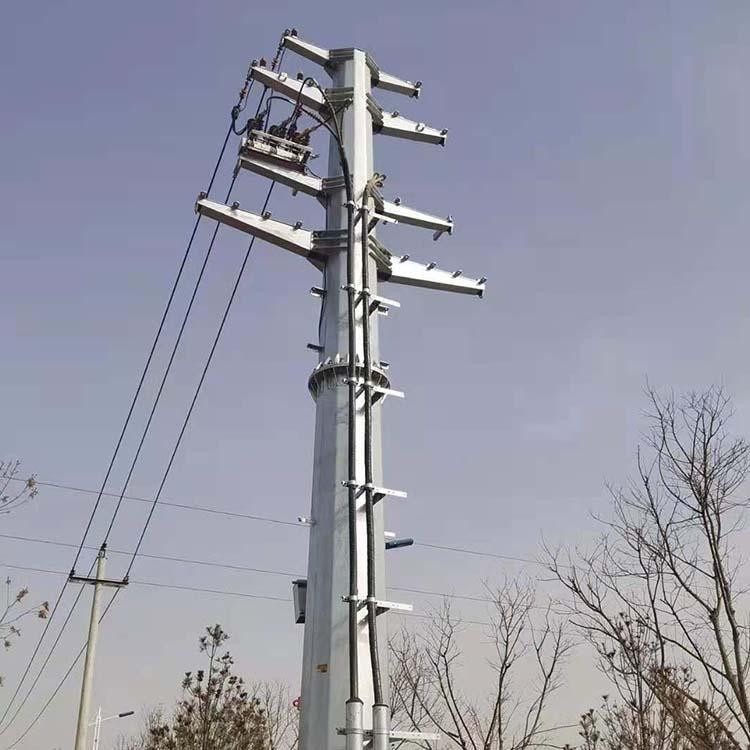
The structural design of the steel pole tower is a key aspect of the overall design process. The tower must be able to support the weight of the conductors, insulators, and any additional equipment, such as lightning protection systems. There are several types of steel pole towers, including monopole towers, lattice towers, and guyed towers.
Monopole towers, like the ones you can learn more about at Steel Pole Tower, are single - pole structures that are often used in urban or suburban areas due to their relatively small footprint. They are typically made of steel and are designed to be self - supporting. The design of a monopole tower involves determining the appropriate diameter, wall thickness, and height based on the loads and site conditions.
Lattice towers are made up of a framework of steel members and are commonly used for high - voltage transmission lines in rural areas. They offer high strength and can support large conductors over long spans. Guyed towers use cables or guy wires to provide additional support. They are often used in areas where the ground conditions are not suitable for a self - supporting tower or where the tower needs to be very tall. The Tallest Monopole Tower showcases the capabilities of modern tower design in achieving great heights.
Material Selection
The choice of steel for the tower is crucial. High - strength steel is often preferred because it allows for lighter and more cost - effective designs. The steel must have good corrosion resistance, especially in areas with high humidity or exposure to chemicals. Galvanizing is a common method used to protect the steel from corrosion. It involves coating the steel with a layer of zinc, which acts as a sacrificial anode and prevents the steel from rusting.

Electrical Design
In addition to the structural design, the electrical design of the tower is also important. The tower must be designed to provide adequate electrical insulation between the conductors and the structure. Insulators are used to support the conductors and prevent electrical current from flowing into the tower. The type and number of insulators depend on the voltage level of the power line.
Lightning protection is another aspect of the electrical design. Lightning strikes can cause significant damage to the power line and the tower. Therefore, the tower must be equipped with a lightning protection system, which typically includes lightning rods and grounding systems. The grounding system is designed to provide a low - resistance path for the lightning current to flow into the ground, thereby protecting the tower and the power line.
Manufacturing and Quality Control
Once the design is complete, the next step is the manufacturing of the steel pole tower. The manufacturing process involves cutting, bending, and welding the steel components according to the design specifications. Quality control is essential at every stage of the manufacturing process to ensure that the tower meets the required standards.
Inspections are carried out to check the dimensions, weld quality, and surface finish of the tower. Non - destructive testing methods, such as ultrasonic testing and radiographic testing, may be used to detect any internal defects in the steel. After the tower is manufactured, it is typically painted or coated to provide additional protection against corrosion.
Installation and Commissioning
The installation of the steel pole tower is a complex and dangerous operation. It requires specialized equipment, such as cranes and rigging gear, and trained personnel. The tower must be erected in a precise manner to ensure its stability and alignment. Once the tower is installed, the conductors and insulators are installed, and the power line is energized.
Commissioning tests are carried out to ensure that the power line is operating safely and efficiently. These tests include electrical tests, such as insulation resistance tests and voltage tests, as well as mechanical tests, such as tower vibration tests.
Maintenance and Monitoring
After the tower is commissioned, regular maintenance and monitoring are required to ensure its long - term performance. Maintenance activities include inspecting the tower for signs of corrosion, damage, or wear. Any damaged components must be repaired or replaced promptly.
Monitoring systems can be installed on the tower to collect data on its performance, such as wind loads, vibration levels, and temperature. This data can be used to detect any potential problems early and take appropriate action to prevent failures.
Conclusion
Designing a steel pole tower for high - voltage power lines is a multi - disciplinary process that requires a combination of engineering expertise, safety knowledge, and environmental awareness. As a Steel Pole Tower supplier, we are committed to providing high - quality towers that meet the specific needs of our customers. If you are in need of a steel pole tower for your high - voltage power line project, we invite you to contact us for a detailed discussion and to explore the possibilities of procurement. Our experience and expertise in the field ensure that we can deliver a solution that is both reliable and cost - effective.
References
- Electrical Transmission and Distribution Reference Book, Westinghouse Electric Corporation
- Manual of Steel Construction, American Institute of Steel Construction
- National Electrical Safety Code, Institute of Electrical and Electronics Engineers