

How do steel training towers improve police officers' tactical skills?
Hey there! As a supplier of Steel Training Towers, I've seen firsthand how these structures play a crucial role in enhancing police officers' tactical skills. In this blog, I'm gonna break down the ways steel training towers contribute to making our law enforcement officers better prepared for real - world scenarios.
Realistic Simulation of High - Risk Environments
One of the key benefits of steel training towers is their ability to create a realistic high - risk environment for police officers. These towers can replicate a variety of settings, such as multi - story buildings where officers might have to conduct hostage rescues, search and arrest operations, or deal with armed suspects.
Imagine a situation where a suspect has barricaded themselves on the upper floors of a building. In a steel training tower, officers can practice approaching the building, assessing the situation from different angles, and planning their entry strategies. The tower's multiple levels and rooms allow for the simulation of complex floor plans, just like in real - life structures.
The solid steel construction also provides a stable and durable platform for these simulations. Unlike some makeshift training setups, steel towers can withstand repeated use, ensuring that officers get consistent and reliable training experiences. This consistency is crucial for building muscle memory and confidence in high - pressure situations.
Vertical Mobility Training
Vertical mobility is a critical skill for police officers, especially when dealing with high - rise buildings. Steel training towers offer an ideal space for officers to practice climbing ladders, using ropes for rappelling, and moving quickly between different floors.
Ladder climbing training in a steel tower helps officers develop the strength and balance needed to ascend to higher levels safely. They can practice carrying equipment while climbing, which is a common requirement in real - life operations. Rappelling from the tower teaches officers how to control their descent, which can be useful in situations where they need to enter a building from above or evacuate hostages.
Moreover, the height of the steel training tower allows officers to experience different levels of vertical movement. They can start with lower levels and gradually work their way up as they gain more confidence and proficiency. This progressive training approach is essential for mastering vertical mobility skills.
Room - Clearing and Search Techniques
Room - clearing and search operations are fundamental aspects of police tactical training. Steel training towers provide multiple rooms and corridors that can be configured to simulate different building layouts. Officers can practice entering rooms, clearing them of potential threats, and searching for suspects or evidence.
In a training tower, officers can learn how to use proper room - entry techniques, such as the "stack" formation, where officers line up outside a door and enter in a coordinated manner. They can also practice communicating effectively with their team members during these operations. For example, using hand signals to indicate the presence of a threat or the all - clear.
The different room configurations in the tower can be changed regularly to keep the training challenging and realistic. This helps officers adapt to different scenarios and develop the flexibility needed to handle unexpected situations in the field.
Situational Awareness and Decision - Making
Steel training towers help officers improve their situational awareness and decision - making skills. When officers enter a training tower, they are exposed to a dynamic environment where they need to quickly assess the situation, identify potential threats, and make decisions on the spot.
For instance, during a hostage rescue simulation in the tower, officers need to evaluate the layout of the building, the location of the hostages and suspects, and the available resources. They have to decide whether to use a direct approach or a more stealthy one. This kind of decision - making under pressure is crucial for successful law enforcement operations.
The tower also allows for the integration of various elements to enhance situational awareness. For example, trainers can introduce distractions such as loud noises, simulated gunfire, or smoke to mimic real - world chaos. Officers need to learn how to filter out these distractions and focus on the task at hand.
Teamwork and Communication
Effective teamwork and communication are essential for police officers, and steel training towers provide an excellent platform for practicing these skills. In a tower training scenario, officers work together as a team to achieve a common goal, whether it's rescuing hostages or apprehending suspects.
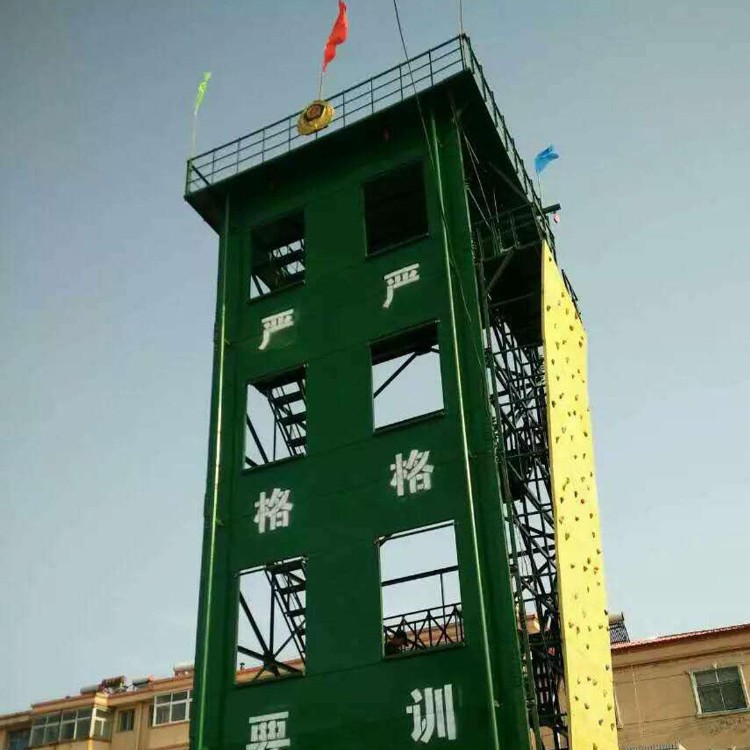

During operations in the tower, officers need to communicate clearly with each other using both verbal and non - verbal means. They need to share information about the location of threats, the status of the operation, and any changes in the situation. For example, an officer who spots a suspect in a room needs to quickly relay this information to the rest of the team.
The confined spaces in the training tower also require officers to work closely together. They need to coordinate their movements, support each other during difficult maneuvers, and cover each other's backs. This kind of teamwork training in a controlled environment helps build trust and cohesion among officers, which is vital for successful operations in the field.
Comparison with Other Training Options
When it comes to police tactical training, there are other options available, such as Fire Drill Tower and Firefighter Training Tower. While these towers can also provide some useful training opportunities, steel training towers are specifically designed to meet the unique needs of police officers.
Fire drill towers are mainly focused on teaching fire - related safety procedures, such as evacuation and fire suppression. While some of the skills learned in these towers, like ladder climbing, can be transferable, they don't offer the same level of realism and complexity for police tactical training.
Firefighter training towers are more centered around firefighting techniques, such as hose handling and building ventilation. Although there may be some overlap in skills, they don't provide the same comprehensive training for police officers in areas like room - clearing, hostage rescue, and high - risk suspect apprehension.
Steel training towers, on the other hand, are customized to simulate the types of scenarios that police officers are likely to encounter in their line of work. They offer a more targeted and in - depth training experience for law enforcement professionals.
Conclusion
In conclusion, steel training towers are an invaluable tool for improving police officers' tactical skills. They provide a realistic, safe, and controlled environment for officers to practice a wide range of skills, from vertical mobility to room - clearing and decision - making. The ability to simulate high - risk scenarios, along with the emphasis on teamwork and communication, makes these towers essential for preparing officers for the challenges they face in the field.
If you're interested in enhancing your police department's training capabilities, I encourage you to consider investing in a steel training tower. Whether you're looking to upgrade your existing training facilities or start a new training program, our steel training towers can provide the solution you need. Contact us to discuss your specific requirements and let's work together to make your officers better prepared for the real world.
References
- Police Training Manuals
- Law Enforcement Tactical Training Journals
- Industry Reports on Police Training Equipment