

How do steel pole towers perform in cold climates?
In the realm of power transmission and distribution, steel pole towers stand as stalwart sentinels, ensuring the seamless flow of electricity across vast distances. As a dedicated supplier of Steel Pole Tower, I've witnessed firsthand the remarkable performance of these structures in diverse environmental conditions. One of the most challenging scenarios is the frigid expanse of cold climates, where the elements test the mettle of every component. In this blog, we'll delve into the intricacies of how steel pole towers fare in these icy landscapes, exploring the factors that influence their performance and the measures taken to ensure their reliability.
Understanding the Challenges of Cold Climates
Cold climates present a unique set of challenges for steel pole towers. The most obvious is the extreme cold itself, which can cause the steel to become brittle and more susceptible to cracking. As the temperature drops, the material properties of steel change, reducing its ductility and increasing its hardness. This phenomenon, known as cold embrittlement, can compromise the structural integrity of the tower, especially under high-stress conditions.
Another significant challenge is the accumulation of ice and snow. These additional loads can exert substantial forces on the tower, increasing the risk of structural failure. Ice can also cause uneven loading, leading to bending and twisting of the tower components. Moreover, the expansion and contraction of ice during freeze-thaw cycles can further exacerbate the stress on the steel, potentially causing fatigue and long-term damage.
Wind is another factor that can have a profound impact on steel pole towers in cold climates. Cold air is denser than warm air, which means that wind at the same speed can exert greater force on the tower. Additionally, strong winds can cause ice to form on the windward side of the tower, creating an imbalance and increasing the risk of toppling.
Design Considerations for Cold Climates
To ensure the reliable performance of steel pole towers in cold climates, careful design considerations must be taken into account. One of the primary factors is the selection of the appropriate steel grade. High-strength, low-alloy steels are often preferred for their superior mechanical properties and resistance to cold embrittlement. These steels are specifically designed to maintain their ductility and toughness at low temperatures, reducing the risk of cracking and failure.
The design of the tower must also account for the additional loads imposed by ice and snow. This may involve increasing the cross-sectional area of the tower components, using thicker steel plates, or incorporating additional bracing and reinforcement. The shape of the tower can also play a role in reducing the accumulation of ice and snow. For example, smooth, aerodynamic surfaces are less likely to trap ice and snow than rough or irregular surfaces.
In addition to structural design, the foundation of the steel pole tower is critical in cold climates. Frost heave, which occurs when water in the soil freezes and expands, can cause the foundation to shift and crack. To prevent this, the foundation must be designed to resist the forces of frost heave. This may involve using deep foundations, such as piles or caissons, that extend below the frost line. The foundation must also be properly insulated to prevent the soil from freezing around it.
Material Selection and Treatment
The choice of materials for steel pole towers in cold climates is crucial. In addition to the steel grade, other components, such as bolts, nuts, and washers, must also be selected for their performance in low temperatures. These components should be made from materials that are resistant to corrosion and have good mechanical properties at cold temperatures.

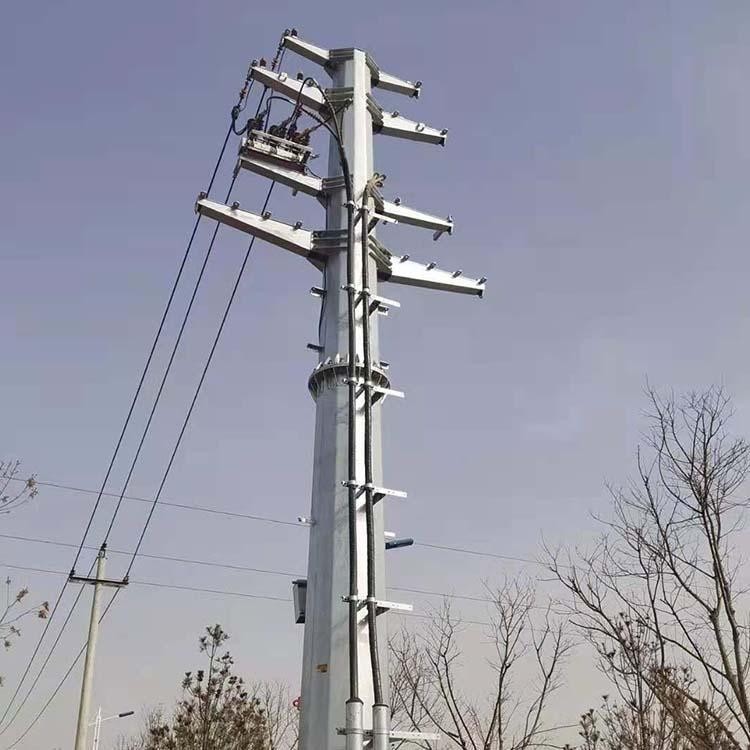
Surface treatment is another important aspect of ensuring the durability of steel pole towers in cold climates. A protective coating, such as galvanizing or painting, can help prevent corrosion and extend the lifespan of the tower. Galvanizing, in particular, is a popular choice for steel pole towers as it provides a sacrificial layer of zinc that protects the steel from rust and corrosion. The zinc coating also helps to prevent the formation of ice and snow on the surface of the tower, reducing the risk of additional loads.
Maintenance and Inspection
Regular maintenance and inspection are essential for the long-term performance of steel pole towers in cold climates. Maintenance activities may include checking for signs of corrosion, damage, or wear, tightening bolts and nuts, and inspecting the foundation for any signs of movement or settlement. Inspections should be carried out at regular intervals, especially after severe weather events, to ensure that the tower is in good condition and safe to operate.
In addition to visual inspections, non-destructive testing techniques, such as ultrasonic testing and magnetic particle testing, can be used to detect internal defects in the steel. These tests can help identify potential problems before they become serious, allowing for timely repairs and maintenance.
Case Study: Tallest Monopole Tower in a Cold Climate
To illustrate the performance of steel pole towers in cold climates, let's take a look at a real-world example: the Tallest Monopole Tower located in a frigid region. This tower was designed and constructed with the specific challenges of cold climates in mind.
The tower was built using high-strength, low-alloy steel to ensure its resistance to cold embrittlement. The design incorporated additional bracing and reinforcement to withstand the additional loads imposed by ice and snow. The foundation was a deep pile foundation that extended below the frost line to prevent frost heave.
Over the years, the tower has withstood numerous severe winter storms, including heavy snowfall, high winds, and extreme cold. Regular maintenance and inspections have been carried out to ensure its continued performance. Despite the harsh environmental conditions, the tower has remained structurally sound, demonstrating the effectiveness of the design and construction measures taken to adapt to cold climates.
Conclusion
In conclusion, steel pole towers can perform exceptionally well in cold climates when designed, constructed, and maintained with the specific challenges of these environments in mind. By selecting the appropriate steel grade, incorporating proper design features, using high-quality materials, and implementing regular maintenance and inspection programs, these structures can provide reliable and long-lasting service in even the most extreme cold conditions.
As a Steel Pole Tower supplier, we are committed to providing our customers with the highest quality products and solutions for their power transmission and distribution needs. Our team of experts has extensive experience in designing and manufacturing steel pole towers for cold climates, and we are dedicated to ensuring that our products meet the most stringent standards of safety and performance.
If you are in the market for steel pole towers for your project in a cold climate, we invite you to contact us to discuss your specific requirements. Our knowledgeable sales team will be happy to provide you with detailed information about our products and services, and to assist you in selecting the right solution for your needs. Let's work together to ensure the reliable and efficient operation of your power infrastructure in even the coldest of climates.
References
- ASCE 7-16, Minimum Design Loads and Associated Criteria for Buildings and Other Structures
- ASTM A572/A572M, Standard Specification for High-Strength Low-Alloy Columbium-Vanadium Structural Steel
- ISO 12944, Paints and varnishes -- Corrosion protection of steel structures by protective paint systems
- NACE International, Corrosion Control in Cold Environments